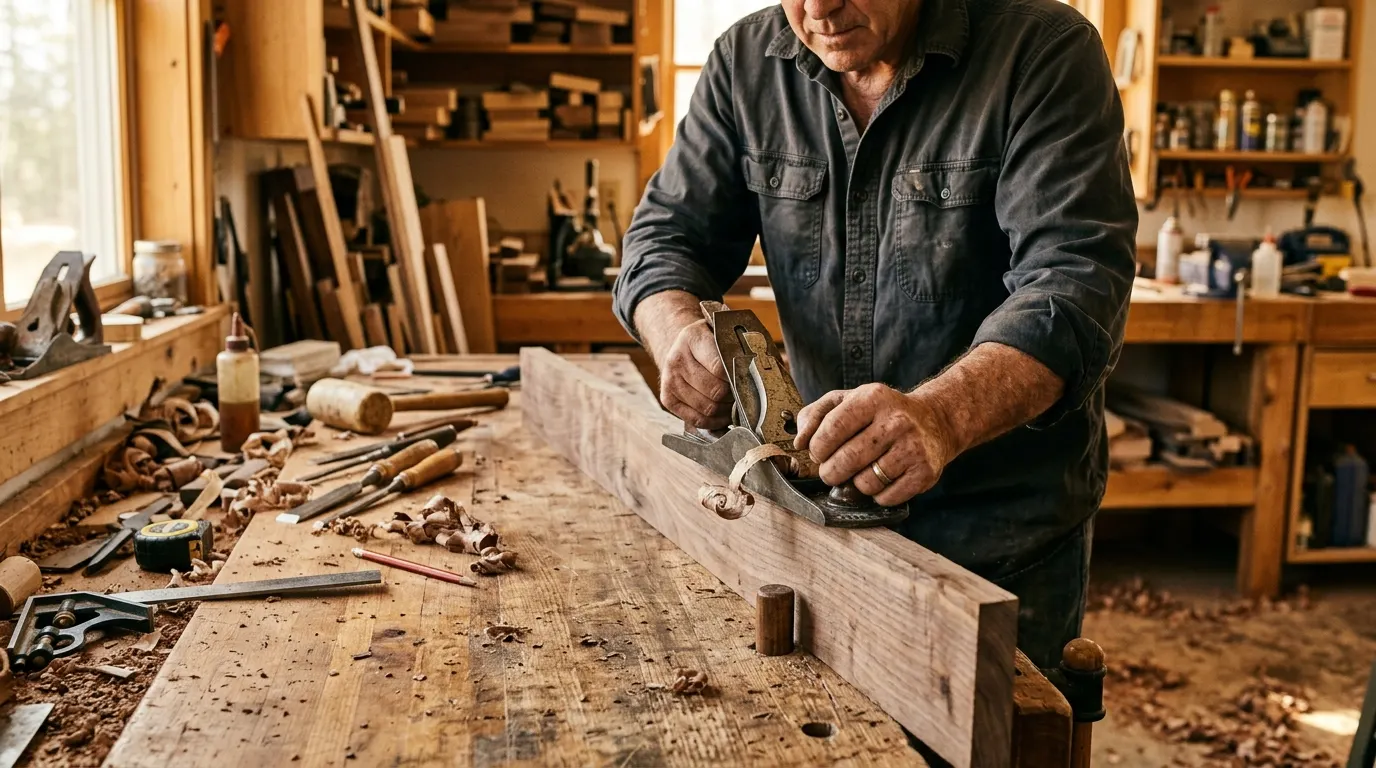
Best Hand Planes for Woodworking
By BenchTrue . 11 min read . Updated July 2026
A hand plane is the single most rewarding tool purchase a woodworker makes, and also the one that generates the most confusing advice. Plane numbers run from tiny block planes to eight-foot jointers, brands range from $90 Stanley reissues to $350 Veritas and Lie-Nielsen smoothers, and every hand-tool forum has a strong opinion about which one to buy first. This guide sorts through it by job: the best all-around smoothing plane, the best budget entry point, the best jack plane for heavy stock removal, the best block plane for end grain and fitting work, and the specialty planes like the router plane that belong in an established kit rather than a first purchase.
Quick answer
The Veritas Custom Bench Plane No. 4 is the best hand plane for woodworkers past the basics, pairing a thick PM-V11 iron with a Norris-style adjuster. Budget shoppers get genuine performance from the Stanley Sweetheart No. 4. Add a WoodRiver No. 5 for stock removal, a Veritas Low-Angle Block Plane for end grain, and a Stanley No. 71 for dadoes.
This guide contains affiliate links. BenchTrue may earn a commission at no cost to you.
The best all-around pick: a No. 4 smoothing plane
The plane numbering system runs from tiny block planes through massive No. 8 jointers, but the No. 4 smoothing plane is the size nearly every hand-tool authority points a woodworker toward first. It is heavy enough to hold its line across a board without chattering and light enough to control precisely for hours of work. A well-tuned No. 4 leaves a surface that is cut clean rather than abraded, with a sheen that sandpaper cannot reproduce.
The Veritas Custom Bench Plane No. 4 (Smoothing Plane) is the best-engineered production smoother on the market. The 0.156-inch PM-V11 iron holds an edge longer than A2 steel while sharpening just as easily, the Norris-style adjuster gives precise depth and lateral control with no backlash, and the ductile iron body is machined to tolerances that need minimal lapping out of the box. The Lie-Nielsen No. 4 Smoothing Plane (A2 Steel) is its peer competitor: A2 steel, bronze hardware, and a fit and finish that many woodworkers simply find more beautiful to use. The community treats the two as equals and debates them the way car enthusiasts debate favorite brands. Buy whichever design you respond to.

Veritas Custom Bench Plane No. 4 (Smoothing Plane)
The most highly engineered production smoothing plane available. Veritas Custom planes use a 0.156-inch-thick PM-V11 iron, a Norris-style adjuster for precise depth and lateral control, and a ductile iron body machined to tight tolerances. The PM-V11 steel holds an edge longer than A2 with similar sharpening ease. The community considers Veritas and Lie-Nielsen peer tools at slightly different price points.
Lie-Nielsen No. 4 Smoothing Plane (A2 Steel)
The American-made benchmark smoothing plane, ground from ductile iron with an A2 steel iron ground to a precise 25-degree primary bevel. Lie-Nielsen planes arrive ready to tune and have been the gold standard for production hand planes in the American hand-tool community for decades. The feel and finish are exceptional.
Best budget pick: Stanley Sweetheart No. 4
Not every woodworker wants to spend $300 on a first plane, and the Stanley Sweetheart No. 4 Smoothing Plane is the honest answer for a budget that tops out closer to $100. Made in England with a 0.100-inch iron and a body cast to tighter tolerances than the standard Stanley line, it is a genuine working plane rather than a hardware-store novelty.
It needs setup to perform: flatten the sole on 120-grit sandpaper taped to plate glass, flatten and hone the back of the iron, and fit the chip breaker so it seats with no gap. That two-hour process is part of the value, since it teaches you how a plane actually works before you make your first shaving. The thinner iron chatters a bit more in hard, figured wood than premium irons do, which is the honest limitation that eventually sends woodworkers toward the Veritas Custom Bench Plane No. 4 (Smoothing Plane) tier, but for the price it earns its keep for years.

Stanley Sweetheart No. 4 Smoothing Plane
Stanley's modern premium No. 4, made in England with a 0.100-inch thick iron and a body that is cast and finished to a higher standard than the standard Stanley line. The Sweetheart is not at Veritas or Lie-Nielsen level but it is a genuine working plane that many beginners use well for years before deciding they need more.
Best jack plane for stock removal: WoodRiver No. 5
A smoothing plane is the wrong tool for dimensioning rough lumber or flattening a wide panel, because heavy stock removal dulls its fine-set edge fast. That job belongs to a jack plane, and the WoodRiver No. 5 Jack Plane is the best value at mid-range pricing. It carries a heavier casting and an A2 steel iron with better tolerances than a standard Stanley, and it does the rough dimensioning and flattening work that would otherwise eat through a smoother sharpening schedule.
Pair a No. 5 with a No. 4 and you have covered nearly every hand-plane task in a shop: the jack plane removes wood fast and flat, the smoother finishes the surface. The sole on most examples needs about 30 minutes of lapping out of the box, which is normal for a plane at this price and worth doing before the first real project.
WoodRiver No. 5 Jack Plane
Woodcraft's house-brand jack plane, made to a specification that significantly exceeds the standard Stanley line. The No. 5 jack plane is the workhorse of the hand-tool shop: it dimensions rough stock, flattens wide panels, and does the heavy stock-removal work before the smoothing plane takes over. WoodRiver planes are well regarded for their price-to-performance ratio.
Best block plane: Veritas Low-Angle Block Plane
A block plane is not a small smoothing plane. It is a low-angle, one-handed tool built for end grain, chamfers, and fitting work where a bench plane is too large and too heavy to control precisely. Most hand-tool woodworkers reach for a block plane on nearly every project, which makes it one of the highest-value tools in the kit relative to its size.
The Veritas Low-Angle Block Plane is the best production block plane available. Its 12-degree bed and adjustable mouth make it configurable for both heavy shavings and gossamer-thin finish cuts, and the machining is precise enough that the mouth adjustment stays consistent for years. It handles end grain cleanly, trims dovetail pins flush, chamfers an edge in seconds, and fits into tight spots a bench plane cannot reach.
If budget is tight, a secondhand vintage Stanley No. 60-1/2 works well once it is sharpened and the sole is checked for flatness. The Veritas earns its price when you want adjustability and precision without gambling on a flea-market find.
Veritas Low-Angle Block Plane
A 12-degree bed angle with an adjustable mouth makes this block plane the most configurable small plane available at any price. The Veritas block plane shines on end-grain, small chamfers, and tight fitting work where a bench plane is too large. The PM-V11 iron option (sold separately) upgrades it further.
Best specialty plane: the router plane
Once your projects move into furniture joinery, a router plane becomes the tool that cleans and levels the floor of a dado, a housing, or a hinge mortise to a consistent depth. No power router matches the control a hand router plane gives in stopped work, and it is the specialty plane the community reaches for most often after the core kit is settled.
The Stanley No. 71 Router Plane (Vintage / Reissue) is available both vintage and as a modern reissue. Vintage examples turn up cheap at flea markets but need blade sharpening and cleanup before they cut well. Either way, a router plane is not a first purchase - it earns its place in the kit when a specific project actually calls for it, not before.
Router planes are also where the vintage-restoration path pays off for a smoothing plane too. A flea-market No. 4 fitted with a Hock Tools O1 Replacement Plane Iron performs close to a premium production plane at a fraction of the price, since the thicker O1 steel iron reduces chatter and takes a finer edge than the original thin Stanley blade. It is a rewarding project once you already know how a well-tuned plane should feel, but not the place to start.
Stanley No. 71 Router Plane (Vintage / Reissue)
A router plane is the hand-tool answer to a plunge router for stopped dadoes, inlay recesses, and hinge mortises. The No. 71 rides the work surface on two wide feet and the iron cuts the bottom of a recess to a consistent depth. Vintage Stanleys are abundant and cheap at flea markets; the Veritas version is the modern reissue with better adjustability.
Hock Tools O1 Replacement Plane Iron
Hock Tools make the go-to replacement iron for vintage Stanley planes. The O1 tool steel is thicker than original Stanley blades (0.125 inches), harder, and takes a finer edge. Fitting a Hock iron to a vintage No. 4 is the most cost-effective way to get near-Lie-Nielsen performance from a $30 flea-market plane.
How to choose the right hand plane for your work
Start with a No. 4 smoothing plane, full stop. It is the most versatile size for learning setup, sharpening, and technique, and it produces finished surfaces from day one. A Stanley Sweetheart teaches you the fundamentals for around $100; a Veritas or Lie-Nielsen gets you the same fundamentals with less setup fuss for around $300.
Add a jack plane once you are dimensioning rough lumber or flattening panels wider than a smoothing plane handles efficiently. Add a block plane right alongside your first bench plane, since it gets used constantly on nearly every project regardless of skill level. Save specialty planes like the router plane for the specific project that actually requires one.
The brand debate matters less than most beginners assume. Veritas and Lie-Nielsen are genuine peers at the premium tier, Stanley Sweetheart and WoodRiver are honest working tools at accessible prices, and a well-tuned vintage plane with a modern iron can compete with any of them. Buy for the job in front of you, keep the iron sharp, and the plane will not be the limiting factor in your work.
Featured in this guide
Veritas Custom Bench Plane No. 4 (Smoothing Plane)
The most highly engineered production smoothing plane available. Veritas Custom planes use a 0.156-inch-thick PM-V11 iron, a Norris-style adjuster for precise depth and lateral control, and a ductile iron body machined to tight tolerances. The PM-V11 steel holds an edge longer than A2 with similar sharpening ease. The community considers Veritas and Lie-Nielsen peer tools at slightly different price points.
Stanley Sweetheart No. 4 Smoothing Plane
Stanley's modern premium No. 4, made in England with a 0.100-inch thick iron and a body that is cast and finished to a higher standard than the standard Stanley line. The Sweetheart is not at Veritas or Lie-Nielsen level but it is a genuine working plane that many beginners use well for years before deciding they need more.
WoodRiver No. 5 Jack Plane
Woodcraft's house-brand jack plane, made to a specification that significantly exceeds the standard Stanley line. The No. 5 jack plane is the workhorse of the hand-tool shop: it dimensions rough stock, flattens wide panels, and does the heavy stock-removal work before the smoothing plane takes over. WoodRiver planes are well regarded for their price-to-performance ratio.
Veritas Low-Angle Block Plane
A 12-degree bed angle with an adjustable mouth makes this block plane the most configurable small plane available at any price. The Veritas block plane shines on end-grain, small chamfers, and tight fitting work where a bench plane is too large. The PM-V11 iron option (sold separately) upgrades it further.
Stanley No. 71 Router Plane (Vintage / Reissue)
A router plane is the hand-tool answer to a plunge router for stopped dadoes, inlay recesses, and hinge mortises. The No. 71 rides the work surface on two wide feet and the iron cuts the bottom of a recess to a consistent depth. Vintage Stanleys are abundant and cheap at flea markets; the Veritas version is the modern reissue with better adjustability.
Keep reading
Related comparisons
Related roundups
FAQ
Frequently asked questions
What is the single best hand plane to buy first?+
A No. 4 smoothing plane. It is the most versatile size, capable of smoothing surfaces, trimming edges, and light dimensioning, and it is the plane nearly every hand-tool authority recommends learning on first. Buy a Stanley Sweetheart No. 4 if budget matters most, or a Veritas Custom Bench Plane No. 4 if you want less setup work and are ready to spend more.
Is a Veritas or Lie-Nielsen hand plane worth the price?+
For a woodworker who already understands chip breakers, mouth adjustment, and iron geometry, yes. Both are genuine engineering peers built to tolerances that need almost no setup out of the box, and both hold their edges longer than budget irons. For a first plane, the premium is harder to justify, since a beginner will not yet notice the difference the extra precision makes.
Do I need a jack plane if I already own a smoothing plane?+
You need one once you are dimensioning rough lumber or flattening panels wider than a smoothing plane handles efficiently. A No. 5 jack plane removes wood fast, which keeps you from burning through the fine-set edge on your No. 4 doing heavy work it was not built for. A smoothing plane alone is enough for a beginner working with pre-dimensioned stock.
When should I buy a block plane?+
Right alongside your first bench plane, not after it. A block plane handles end grain, chamfers, and small fitting tasks that come up on nearly every project regardless of skill level, and it is small enough that most woodworkers keep it within arm's reach on the bench at all times.
What is a router plane and do I need one right away?+
A router plane levels the floor of a dado, housing, or mortise to a consistent depth, a job no power router matches for control in stopped work. It is a specialty tool that earns its place once your projects include furniture joinery like dadoes and hinge mortises. It is not a first-purchase plane and should wait until a specific project requires it.