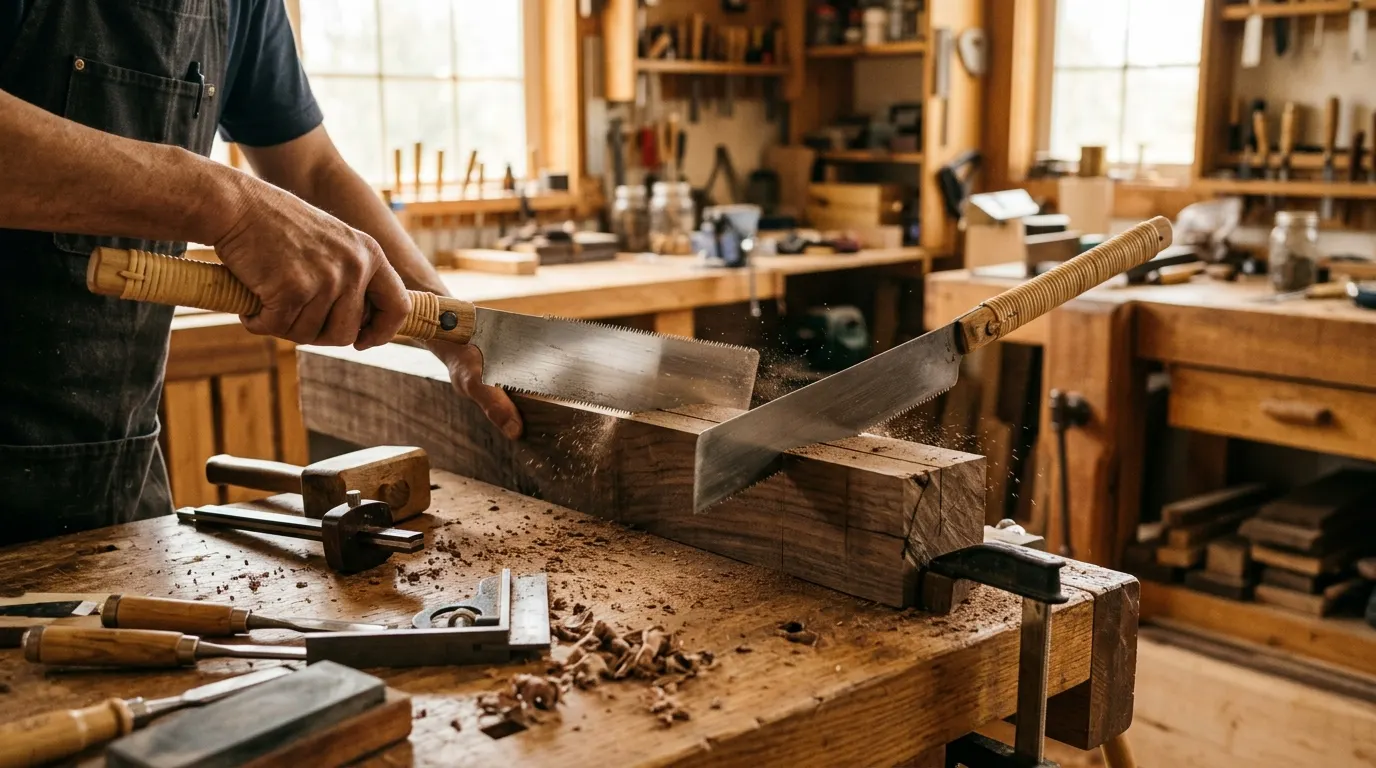
Suizan vs Gyokucho Japanese Pull Saws
By BenchTrue . 9 min read . Updated September 2026
The Suizan and Gyokucho comparison surfaces frequently in hand-tool woodworking forums because both brands represent excellence in Japanese pull saws, but they approach the tool from different angles. Suizan focuses on affordability and versatility: the ryoba with rip and crosscut teeth on one blade covers most cutting tasks and replaces easily when the blade dulls. Gyokucho, one of Japan's oldest saw makers with a heritage spanning centuries, pursues precision and specialized application: each saw excels at a specific task with exceptional engineering. The choice depends on whether you value versatility or specialization, and whether you sharpen and restore tools or prefer to replace blades. This guide walks through both traditions in detail so you can decide which one fits your workshop.
Quick answer
For most beginners and general shop use, the Suizan Japanese Pull Saw 9.5-Inch Ryoba is the practical choice: affordable, versatile with rip and crosscut teeth, and replaceable blades eliminate maintenance. For precision crosscutting and joinery work where specialized blade geometry matters, the Gyokucho Razorsaw 240mm Crosscut represents heritage engineering and a saw refined over generations. Buy the Suizan first; add the Gyokucho when your work demands the precision.
This guide contains affiliate links. BenchTrue may earn a commission at no cost to you.
What makes Suizan the practical choice for most woodworkers
The Suizan Japanese Pull Saw 9.5-Inch Ryoba represents the modern approach to Japanese pull saws: prioritize affordability, versatility, and low maintenance over specialization. A 9.5-inch ryoba blade with rip teeth on one side and crosscut teeth on the other handles both ripping and crosscutting with minimal technique practice. The thin impulse-hardened blade cuts faster than a Western push saw of equivalent cost, and when the blade dulls after months of use, you replace it for $8 to $15 rather than sharpening.
The Suizan ryoba is the saw that begins most woodworkers' experience with Japanese pull saws. It teaches you the pull-stroke action, the thin kerf, and the speed advantage over Western saws without requiring knowledge of different blade geometries or restoration skills. The rip/crosscut versatility means one blade covers the majority of tasks.
This is not to say Suizan is crude or entry-level. The impulse-hardened teeth are the same heat-treat method premium makers like Gyokucho use. The difference is application focus: Suizan optimizes for versatility and cost; Gyokucho optimizes for precision in a specific cut.

Suizan Japanese Pull Saw 9.5-Inch Ryoba
The most-recommended entry-point Japanese pull saw for woodworking. The 9.5-inch Suizan ryoba has rip teeth on one side and crosscut teeth on the other on a thin, replaceable impulse-hardened blade. Cuts far faster than a push saw of comparable price and tracks straight in the cut without the technique needed for Western push saws.
Gyokucho heritage and precision-focused engineering
Gyokucho is a Tokyo saw maker with over 300 years of blade-making heritage in the Japanese cutlery and tool tradition. Their approach is the opposite of Suizan's versatility: each saw is designed for one purpose, perfected for that purpose, and made to a specification that reflects centuries of refinement. The Gyokucho Razorsaw 240mm Crosscut is their precision crosscut saw, not a compromise between ripping and crosscutting but a blade optimized entirely for crosscut work.
The precision manifests in blade geometry: crosscut teeth spaced and filed with a specific fleam angle to cut across the grain cleanly without tearout, a thin plate kept rigid by careful tempering rather than a stiffening spine, and a handle balanced for extended precision work. Gyokucho saws are the choice of woodworkers who do fine crosscutting, trimming, and joinery work as the core of their practice.
The heritage marketing is not nostalgia. The engineering standards that Gyokucho maintains across its saw line represent generations of optimization that modern production efficiency cannot replicate. You are buying refined technique in tool form.

Gyokucho Razorsaw 240mm Crosscut
A specialist single-purpose crosscut pull saw from one of Japan's oldest and most respected saw makers. The Gyokucho Razorsaw is lighter and more precise than a ryoba for crosscut-only work, with a thin plate and finely spaced crosscut teeth. The community uses these for final trimming, flushing plugs, and clean precision crosscuts.
Blade design and kerf comparison
Both Suizan and Gyokucho use thin, replaceable blades, but the design philosophy differs significantly. The Suizan Japanese Pull Saw 9.5-Inch Ryoba blade is approximately 0.3mm thick with rip teeth on one side (typically 8 TPI) and crosscut teeth on the other (11 to 12 TPI). The compromise geometry - neither fully optimized for ripping nor for crosscutting - allows one blade to cover both tasks. The thin kerf means less material removed per stroke, but the rip/crosscut hybrid means neither is as aggressive as a dedicated blade.
The Gyokucho Razorsaw 240mm Crosscut blade is similarly thin (approximately 0.3mm) but the tooth pattern is entirely crosscut-optimized. The teeth are filed with a fleam pattern to cut across the grain and leave a smooth surface without the fuzzing that a rip-pattern blade produces in crosscutting. Finer tooth spacing (13 to 15 TPI depending on the model) gives a cleaner kerf.
In practice: the Suizan produces fast, serviceable cuts in both directions with minimal technique. The Gyokucho produces superior surface finish when crosscutting hardwood, particularly in thin stock where a cleaner kerf is important for final appearance. For rough crosscuts where speed matters more than surface finish, the Suizan is sufficient. For precision trimming and joinery, the Gyokucho's specialized geometry shows.
Suizan Japanese Pull Saw 9.5-Inch Ryoba
The most-recommended entry-point Japanese pull saw for woodworking. The 9.5-inch Suizan ryoba has rip teeth on one side and crosscut teeth on the other on a thin, replaceable impulse-hardened blade. Cuts far faster than a push saw of comparable price and tracks straight in the cut without the technique needed for Western push saws.
Gyokucho Razorsaw 240mm Crosscut
A specialist single-purpose crosscut pull saw from one of Japan's oldest and most respected saw makers. The Gyokucho Razorsaw is lighter and more precise than a ryoba for crosscut-only work, with a thin plate and finely spaced crosscut teeth. The community uses these for final trimming, flushing plugs, and clean precision crosscuts.
Handling and user experience differences
The Suizan ryoba arrives with an unfinished wooden handle designed for quick, practical use. The handle is straightforward and gets out of the way - the saw is about the work, not the tool. After months of use, the wood may darken or develop a patina, which some woodworkers consider part of the character. The handle does not require finishing or maintenance but also does not have the aesthetic refinement that some other makers pursue.
Gyokucho handles are finished with more care, often with a subtle finish and balance that reflects the heritage toolmaking approach. The saw feels more substantial in hand, which is deliberate: the tool should feel like precision equipment, not a consumable. The balance point and handle ergonomics are refined for extended precision work where comfort matters.
For rough crosscuts and ripping, the Suizan's utilitarian handle is perfectly adequate and honestly appropriate - the work happens fast. For extended precision work like trimming plugs or cutting dovetail baselines, the Gyokucho's refined handle becomes more appreciated.
Cost and value comparison
The Suizan Japanese Pull Saw 9.5-Inch Ryoba typically costs $30 to $45, making it an affordable entry point into Japanese pull saws. Replacement blades are $8 to $15. Over a year of active use, you might replace the blade once or twice, so the total cost of ownership is low.
The Gyokucho Razorsaw 240mm Crosscut typically costs $25 to $40 for the saw, sometimes less than the Suizan, but this is where perception matters: the same price tag buys a different proposition. Replacement blades for Gyokucho are typically in the same $8 to $15 range, but the specialized geometry means you might not replace it as frequently because the precise tooth filing and blade stiffness endure longer in precision work.
The value equation depends on your work. For general shop use where you cut all directions and speed matters, the Suizan is better value - you get versatility at the lowest cost. For precision crosscutting as a regular practice, the Gyokucho value comes from the refined geometry producing superior results session after session, which justifies ownership even at the same price.
Suizan Japanese Pull Saw 9.5-Inch Ryoba
The most-recommended entry-point Japanese pull saw for woodworking. The 9.5-inch Suizan ryoba has rip teeth on one side and crosscut teeth on the other on a thin, replaceable impulse-hardened blade. Cuts far faster than a push saw of comparable price and tracks straight in the cut without the technique needed for Western push saws.
Gyokucho Razorsaw 240mm Crosscut
A specialist single-purpose crosscut pull saw from one of Japan's oldest and most respected saw makers. The Gyokucho Razorsaw is lighter and more precise than a ryoba for crosscut-only work, with a thin plate and finely spaced crosscut teeth. The community uses these for final trimming, flushing plugs, and clean precision crosscuts.
Which saw for your work
Start with the Suizan if you are new to Japanese pull saws. The rip/crosscut versatility means one blade covers most tasks, the thin kerf and pull action teach you the fundamental advantage of Japanese saws, and the low cost means no regret if you find you do not prefer pull saws over Western backsaws. Most beginners find a Suizan Japanese Pull Saw 9.5-Inch Ryoba transforms their crosscutting confidence within the first session.
Add the Gyokucho Razorsaw 240mm Crosscut when you notice yourself reaching for precision crosscutting regularly - trimming plugs, flush-cutting tenons, making clean baselines on joinery. At that point the specialized blade geometry becomes valuable rather than speculative. Many woodworkers end up owning both: a Suizan ryoba for general work and a Gyokucho for precision trimming.
If you are training in Japanese joinery and doing most of your cutting with pull saws rather than Western backsaws, look at a Z-Saw Dozuki 240mm (Fine Crosscut with Spine) (a spine-stiffened, fine-toothed Japanese saw) alongside the Gyokucho crosscut saw. The dozuki handles tenon cheeks and fine joinery; the Gyokucho handles the final precision trimming that endows the joint with its final surface quality.
Suizan Japanese Pull Saw 9.5-Inch Ryoba
The most-recommended entry-point Japanese pull saw for woodworking. The 9.5-inch Suizan ryoba has rip teeth on one side and crosscut teeth on the other on a thin, replaceable impulse-hardened blade. Cuts far faster than a push saw of comparable price and tracks straight in the cut without the technique needed for Western push saws.
Gyokucho Razorsaw 240mm Crosscut
A specialist single-purpose crosscut pull saw from one of Japan's oldest and most respected saw makers. The Gyokucho Razorsaw is lighter and more precise than a ryoba for crosscut-only work, with a thin plate and finely spaced crosscut teeth. The community uses these for final trimming, flushing plugs, and clean precision crosscuts.

Z-Saw Dozuki 240mm (Fine Crosscut with Spine)
Z-Saw's dozuki is the Japanese equivalent of a Western backsaw: a spine-stiffened, fine-toothed pull saw for precise joinery cuts. The spine prevents deflection when cutting tenon cheeks, dovetail baselines, and precision crosscuts in thin stock. Z-Saw blades are widely regarded as the best value in the Japanese dozuki category.
Featured in this guide
Suizan Japanese Pull Saw 9.5-Inch Ryoba
The most-recommended entry-point Japanese pull saw for woodworking. The 9.5-inch Suizan ryoba has rip teeth on one side and crosscut teeth on the other on a thin, replaceable impulse-hardened blade. Cuts far faster than a push saw of comparable price and tracks straight in the cut without the technique needed for Western push saws.
Gyokucho Razorsaw 240mm Crosscut
A specialist single-purpose crosscut pull saw from one of Japan's oldest and most respected saw makers. The Gyokucho Razorsaw is lighter and more precise than a ryoba for crosscut-only work, with a thin plate and finely spaced crosscut teeth. The community uses these for final trimming, flushing plugs, and clean precision crosscuts.
Z-Saw Dozuki 240mm (Fine Crosscut with Spine)
Z-Saw's dozuki is the Japanese equivalent of a Western backsaw: a spine-stiffened, fine-toothed pull saw for precise joinery cuts. The spine prevents deflection when cutting tenon cheeks, dovetail baselines, and precision crosscuts in thin stock. Z-Saw blades are widely regarded as the best value in the Japanese dozuki category.

Suizan Japanese Flush Cut Pull Saw
A specialty pull saw with teeth filed flush to the plate so the saw can trim wooden plugs, dowels, and tenon ends flush with a surface without scratching. The flexible plate bends to conform to the work surface. One of the most frequently used specialty saws in a furniture-making shop.
Crown (Pax) 20 TPI Dovetail Saw
Crown Tools of Sheffield makes what many consider the best-value Western dovetail saw in production. The 20 TPI fleam-filed teeth cut cleanly across and with the grain for dovetail cheeks and baselines. The saw comes ready to use after light tuning and performs at a level far above its price.
Keep reading
Related comparisons
Related roundups
FAQ
Frequently asked questions
Should I buy the Suizan or the Gyokucho if I can only pick one?+
Buy the Suizan first. The rip/crosscut versatility covers most cutting tasks, the low cost removes any regret, and it teaches you Japanese pull saw fundamentals. Add the Gyokucho when you are doing precision crosscutting regularly and the specialized blade geometry will add value to every cut.
Can you cut dovetails with a Gyokucho crosscut saw?+
Yes, but it is not the specialized tool for that job. A crosscut saw is optimized to cut across the grain, and dovetail work requires both ripping and crosscutting in sequence. A Z-Saw Dozuki 240mm (Fine Crosscut with Spine) (a spine-stiffened, fine-toothed Japanese saw) is the specialized tool for dovetail baselines and joinery. If you are doing significant dovetail work, buy a dozuki for that purpose and the Gyokucho for precision trimming.
How often do you need to replace Japanese saw blades?+
It depends on how much you use the saw and the kind of work. Impulse-hardened Japanese blades like Suizan and Gyokucho last many months under moderate use and require replacement when they stop cutting cleanly. Under daily heavy use in a furniture shop, a blade might dull in 4 to 8 weeks. For hobby use, a blade easily lasts 6 to 12 months. Replacement blades cost $8 to $15 and swap out in seconds.
Can you sharpen a Gyokucho saw blade or do you always replace it?+
Impulse-hardened teeth cannot be resharpened with a file - the heat treatment makes them too hard. Replacement is the maintenance plan. This is by design: the cost of a replacement blade is so low ($8 to $15) that you come out ahead compared to sharpening a Western saw multiple times, and the blade body lasts indefinitely so you only replace the cutting edge.
Is a Gyokucho saw worth buying as your second saw, or should you master the Suizan first?+
Master the Suizan pull action and learn what Japanese saws do first. Once you are comfortable with the pull stroke and the thin kerf advantage, the Gyokucho adds specialized precision without requiring you to learn the fundamentals again. Buy them in that order and you will understand what each one is optimized for.